Sunday, September 8, 2013

Art and Literature

Mczoum is one of the many people I met through the blog and facebook page. Soon enough, he became one of my dearest friends. I look up to him a lot as a person, as a reader and as an artist. Aside from being an attorney in law, he is a well read person who is very knowledgeable in German philosophy, History, French and Russian Classic Litterature, as well as Spanish and Arabic Poetry. Artistically, he is passionate about painting, lomography and iphone art. In fact, Mczoum has exhibited his photography work in many galleries around the world including Paris, New York, LA, Milano and Poland. I just love his work but apparently I am not the only one for he has been awarded several times. In case you are interested, you can check his gallery at the following link:

http://www.iphoneart.com/users/1433/biography

In May, Mczoum pointed out that book pictures posted so far on the blog did not reflect an investment of the bloggers. He was right. So far we hadn't taken book pictures ourselves or added our favorite quotes from the books. His remark lead therefore to the creation of a new page "Photos" where personally shot pictures of books will be added along with some of the favorite quotes from the corresponding book. Anyone can post here, so if you have some book pics and favorite quotes do not hesitate to send them to bookloverbookclub@gmail.com.  

Below you will find a sample of Mczoum's book pictures and favorite quotes that he kindly provided. I hope you will enjoy them as much as I did.


 “The best fortress which a prince can possess is the affection of his people.”


“She would have liked not to be alive, or to be always asleep.” 


“Do you know that it is in your company that I have had my finest thoughts?” 


"When I desire you, a part of me is gone."


"You can suffer nostalgia in the presence of the beloved if you glimpse a future where the beloved is no more” 


 "Until I was fourteen, I divided humanity into three categories: women, little girls and buffoons."


 “Because we don't have much time together, I will give you as much love in a year as I could give you in a lifetime.”


Saturday, September 7, 2013

Book Lovers First Gathering

The net has been a great tool of interaction with book lovers, be it on the blog or on facebook. This pleasant experience has lead me to think that it was about time for book lovers to interact face to face. Therefore, I have suggested a meeting around drinks/coffee and snacks to talk about anything and everything related to books and reading. The idea was immediately highly welcomed and the gathering took place last Friday at Cappuccino, Zaytounay bay in Beirut.  This was honestly a very memorable event for me. I would like to just thank the book lovers that have showed up on that day. I was extremely happy to meet new faces and learn about each and every person, their reading interests as well as their preferences. The atmosphere was just magical. I'll let the pics say the rest although I am sorry some are not in them because we only took them at the end. 


Finally, book lovers, let's stay in touch for more fun gatherings in the future and hurray to meeting new readers in Beirut.


Tuesday, September 3, 2013

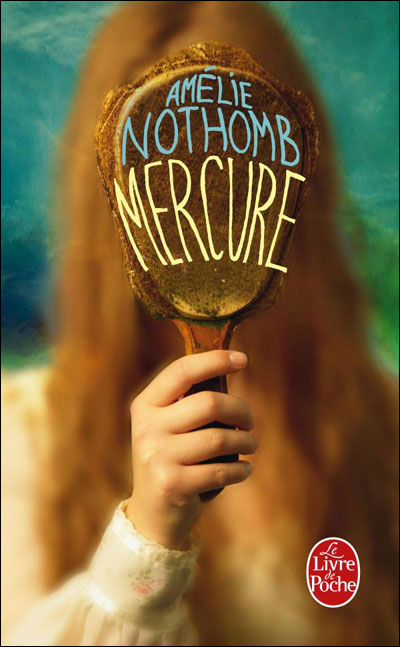
Mercure - Amélie Nothomb First vs Second Ending

Amélie Nothomb is my syndrome and my cure and the month of August is the month of Amélie Nothomb by excellence. Why? One could ask. The answer is simply because Nothomb publishes a new book every year on this month. The waiting period before the new book's release often brings back old memories and new discussions, and this is how I was lucky to meet two Nothombophiles just like me (Ok maybe not exactly like me, but still, the point is that they love Nothomb's books :D).

The funny thing was that both Boudi and Tonie's favorite book by Nothomb was "Mercure". When I read this book the first time, it did not mark me and I couldn't understand why people even like it, it didn't seem original to me. It wasn't until I read a professional review of this book that I completely changed my mind about it. This is literally how and when I learned to read between the lines and the importance of paying attention to the literary, psychological  and social value of a book, not only its plot and style. The review is written in French by a philosophy and letters PhD holder (Université catholique de Louvain) with whom I have discussed this book. To me the review is perfect in every sense of the term but you can check by yourselves at this link: 


"Il nous est ordonné d'être jeunes et belles et, dès qu’il s’agit de tomber amoureuses, il nous est conseillé de ne pas tenir compte de ce genre de détail"
 

Briefly, the story is about a very pretty girl who is tricked into believing that her face has been mutilated so badly that she doesn't even look human anymore. Of course the old man that tricked her keeps her on an island, isolated from the world. He looks after her but he also has sex with her. The girl likes the old man as a father although he is almost as old as her grandfather. She hates however the sexual acts and maybe even more because she likes his paternal side. The book is a modified version of the Beauty and the beast or Esmeralda and quasimodo but with the hero being much older than the girl. The themes in this book include among others beauty, incest, age difference etc. One day the girl gets sick and the old man brings a nurse to look after her. The nurse discovers the truth and decides to save the girl. Nothing new? Nothing creative here one could say right? Wrong! Amélie Nothomb ends the book in two different ways:
Ending number 1: The nurse saves the girl, the girl learns also that she is pretty and they both spend their lives cruising happily ever after together as friends (or more, the author keeps it unclear).
Ending number 2: The nurse saves the girl from the old man only to take his place. The girl still thinks she is mutilated and she is not freed, however she seems to enjoy her captivity and life with her new aggressor: the beloved nurse. Beloved yes, the girl did not like the old man but she likes the nurse, in fact the two clicked ever since they met.

Automatically, the nurse's behavior in each ending makes her
1- A hero who is trying to do something good for the girl.
2- A selfish person who is trying to do something good for herself.
Amélie Nothomb wrote two endings because she couldn't choose one. I thought that she left it for the readers to choose the ending they preferred and I happen to have preferred the second one for the following reasons:

The main reason why I liked it is because whenever someone gives me two choices one that is realistic and one that is a bit exotic, I go for the exotic one. As I always say, if I want to read about real stuff I'd pick up a newspaper and not a book! However, even though I hate realistic events, I found that the second ending is the most realistic one, but not in a dull way. The second ending exposes the very true nature of human beings and that is: selfishness (For more insight on this matter refer to "the selfish gene" by Richard Dawkins). 

Also, heroism in my opinion, does not exist and altruism is nothing more than an invention or an illusion. The only real emotion that is innate to mankind is selfishness. It seems crazy said like that but let's take some examples: in a couple, you would say that a person that always tries to make the other happy is a proof that altruism exists. But a person in a couple unconsciously is trying to make him/herself happy because when the other is happy, the happiness returns back to him/her. Newton's third law seems to agree with this explanation for it states that "for every action, an equal and opposite reaction will take place" meaning that you receive what you give! This sacred Newton, who knew he was that tough?! Another example and I will stop to avoid too much digression: parents, often mothers are seen as the most powerful examples of sacrifice and altruism for they do anything for their children. THEIR children! yes, their half selves, their own genes! We are selfish, end of story. 

Another reason why I preferred the second ending is because it is the scenario of instinct overthrowing reason. Only something very powerful and overwhelming can lead to such case and the feeling after unleashing the instincts would be as powerful and overwhelming. In our lives, at least once, we all have given in to our instinct. If we remember that one time, and the powerful emotions that took over us when we unleashed our instincts, we should be able to better understand the power and beauty of the second ending.

Finally, I personally liked the second ending because it would have personally made me much more happier than the first, if I were to be the nurse. I mean who wouldn't want to have control, all the pleasure and no repercussions?

Now that being said, I think that we can prefer one conclusion or the other but at the end, Nothomb was right, both are necessary for the book. Nothing makes "Mercure" the great book that is is than having these two endings and giving us the freedom of choice. In both cases the girl is happy which is to say happiness can be achieved by different paths. 

P.S. If you have read the book, don't hesitate to let me know which ending you prefer and why?


Thursday, August 29, 2013

Professional Review of The Arch and the Butterfly by Mohammed Achaari

I have published my personal input on this book previously on this blog. But a few days ago, a friend stumbled upon a professional review of this book that I found was more than excellent. I couldn't but share it with you guys, so here is the link:
http://www.alimbaratur.com/index.php?option=com_content&view=article&id=1184:-r--&catid=14:2010-08-07-22-48-22&Itemid=16
Kudos to the brilliant author on her more than wonderful review and I am from now on a fan.
Hats off


Tuesday, August 20, 2013

The Words by Jean-Paul Sartre

This 200 pages book hides inside a 10 000 pages literary text. How is this possible one could ask? I have no freaking idea! This is why Sartre is Sartre I guess. Erratum, that sentence should have stated this is why Sartre the Great is Sartre the Great as I have decided to "literary" refer to him from now on. Reviewing "the words" could lead to the writing of a 100 PhD dissertations and a lot more essays. I have been struggling to write something about it for long and finally decided to take that leap of faith to see where my thoughts (nothing more) would take me so here it goes.

 
 «J'ai commencé ma vie comme je la finirai sans doute : au milieu des livres. Dans le bureau de mon grand-père, il y en avait partout ; défense était de les faire épousseter sauf une fois l'an, avant la rentrée d'octobre. Je ne savais pas encore lire que, déjà, je les révérais, ces pierres levées : droites ou penchées, serrées comme des briques sur les rayons de la bibliothèque ou noblement espacées en allées de menhirs, je sentais que la prospérité de notre famille en dépendait...»


"The words" is an autobiography written by Sartre the Great and we (him and I) have never been properly introduced before. It wasn't until a dear friend kindly offered me this book that I got the chance to discover Sartre the man and Sartre the writer. I have separated the two because I have clear distinct feelings for each. I do believe the man had a lot to do with Sartre becoming the Great author/philosopher he is and the aim of the autobiography itself was to show how one lead to another. Written at the age of 59, Sartre retraces back the first 10 years of his life, claiming that he knew back then that he wanted to become an author because of the influence of his grandfather and everything he read as well as his first attempts of writing. The influence of the family and the grandfather is present in the whole book which is divided in two parts entitled "reading" and "writing", respectively. From the organization one can tell that this book is logical and well structured and clearly shows the importance of family more than anything else in Sartre's decision because of its presence in both parts of the book. However, I found this autobiography to be too well organized and clear for my taste which made it hard for me to believe that it was genuine and honest as autobiographies should aim to be. Besides, I believe that Sartre was lying on two major issues one of which is more clear and evident than the other.

First, it is quasi impossible for someone to remember all the books read during childhood or at least as much books as those mentioned in this autobiography. I mean seriously, the other day I tried to remember the books I read the past month alone and I just couldn't remember anything! It was only after I consulted Goodreads that I was able to answer this question. So claiming that one recalls the book read 40 years ago is total bogus to me. No doubt about it!!!

Second, I am pretty sure that no one has an idea about what he/she wants to become when they get older. Let's assume some do, I am sure the idea would not be as clear and extremist (oh yes we'll get back to this) as that presented by Sartre. A child is a vessel for a thousand and one ideas a day while here Sartre presents himself as a one idea/goal/aim child. He also awkwardly views literature as a religion, his grandfather as a Priest (sometimes also God) and himself, the miracle child that has to write because literature needs him, because the world needs him. Said by a child, this might sound kind of cute, but you just feel that  this arrogance cannot be that of a child but rather that of a successful intelligent yet obnoxious and shallow kind of a MAN.This further hints that the story we are reading is a fake one.

I am not evaluating the literary value of this book or Sartre the Great. It is absurd as I mentioned before. All the successes and intelligence in the world do not however justify the arrogance and pretentiousness of a man. Sartre the man, was full of that! He tries to dissimulate it in the child in him but I think he failed to convince me at least. Writing an autobiography by itself tends to stem in many cases from arrogance. The art of autobiography can also stem from other needs such as trauma or historical recording of events etc. In fact, it is for these reasons that some of my favorite literary books are autobiographies. However, Sartre was 59 when he decided to write about the reasons that made him become an author. Put into context, this book is the fruit of an arrogant big shot who feels the need to let people know how he became the successful man he is. To this aim he invents or reformulates his childhood story because one can just feel him lying as mentioned before. He fails however to overcome his arrogance at many instances starting from the moment when he starts detailing his genealogy. Seriously, what's wrong with men and family trees!!! Nothing justifies his choice of elaborating on his family tree at the very first pages of this book except extreme arrogance. The other major arrogant point was him believing he had to write to save humanity. Can someone be any more delusional than that? Please!

I am not sure if Sartre was self aware of the image he was giving of himself. But I believe that probably he was and he found nothing wrong in being arrogant. One cannot judge a literary masterpiece based on the character of its writer I agree, but I still believe that modesty in addition to the intellectual capacity makes the most captivating writers ever and probably the smartest (those who brag on the opposite fall in the annoying category).

In conclusion, reading this book made me discover two Sartres, Sartre the man and Sartre the Great. One I loved and one I hate. Sartre the Great will never become one of my favorite authors because of the man I discovered behind. I cannot dare to deny Sartre the Great of his rightful literary and intellectual value. Then again some books' influence on you just cannot be detached from their authors' influence. But one thing is sure, I will not forget the Sartres.


Wednesday, July 31, 2013

The Book of Mirdad - Mikhail Naimi

Mikhail Naimi is a prominent Lebanese author of the early 20th century. He is known for being one of the founders of the movement for the rebirth of Arabic literature presided by Gibran Khalil Gibran. Some people believe he was the best Lebanese writer of his era. I sincerely do not wish to think for a second that he might have written another book as horrible as this one. With all objectivity, this book is what I call a mutilation to writing and an offense to readers. The author should have been ashamed of himself upon writing this book which he clearly wasn't for he had insisted on publishing it in Lebanon after failing to do so in London.


 The only nice thing about this book was the cover.

What were the people who published the book thinking at that time? Were they that blinded by his name and fame or were they just that bad at evaluating texts? I tell you one thing, they should have followed the Brits and spared me this great pain I felt while and after reading the book!

The book of Mirdad was a masterpiece until Mirdad opened his mouth. I cannot describe you my disappointment. I got seriously hooked on to the story as soon as a man decided out of nothing to go up a mountain taking the hard road, the road of no return. As he climbed, I felt my reading pleasure going crescendo with him. When he arrived at the top, I saw myself standing next to him. He dies and resurrects and I follow him. Then all of a sudden, I felt as if someone pushed me off the top of the Everest into the 7th hell below. The pleasure of reading, the creative and surprising encounters or misencounters that lead to the delivery of the book of Mirdad, and the petrification of the messenger priest all vanish as soon as Mirdad enters the scene. There was no more plot in the book, I wasn't reading a story anymore but rather listening to gibberish talk by the author or Mirdad (it doesn't matter). My personal interpretation is that the character reflects the author's perception of himself: someone who has something to say about everything. Unfortunately, as a reader I found that all that was said had no added value whatsoever because the ideas were pretty much reformulations of previous teachings from the Bible, Coran and almost every religious book. Can you imagine the horror in reading the "deja" heard about stuff that Mirdad had to say about any subject imaginable? He had to have a word about prayer, love, judgement and many many other stuff including IRONICALLY silence (He couldn't just shut up now could he?)!

What was more annoying than Mirdad talking is that he had a pattern-like way of talking: All Mirdad had to do to put up a sentence was to combine several adjectives that mean the same thing and then add to those the opposite adjectives. Everything I read was pretty meaningless. Not only the book story was bad but the writing was even worse! I was suffering, agonizing at every single page turn but I kept going because I thought that the book cannot finish with Mirdad speeches alone. I was waiting for Mirdad to come back, for the man who turned to stone to be freed, for anything that doesn't come out of Mirdad's mouth! The story could have been much better if only the ending was different alas, I was disappointed again and Mirdad kept moralizing until the end. Let me tell you that I had to go through a seriously intensive reading cure program to heal from this book. Thank God I feel much better now, in case you were wondering.

Now on a different issue, I have to say that some people I have discussed the book with, told me it reminded them of Jesus and that they felt as if the book indeed was spreading some teachings they already know. I agree with them on that for I have to admit that I instantly remembered the teachings of Jesus although I felt that there were no two persons more different than Mirdad and Jesus. How could one even confuse the two? Jesus is good and rarely talks while Mirdad is a devious a** who never stops talking with his arrogant tone, and the worst is that he's plagiarizing! It's funny that the Brits' reason for rejecting the book' s publication was that they were afraid that the book's aim was to spread new religious ideas or if you want old religious ideas by a new prophetic figure. Nonsense! Mirdad is so despicable that it makes it so easy to resent him and his teaching than to follow him one bit!

To conclude, I believe the author committed the worst imaginable sin in writing and that is publishing a book that is intended deliver to people a person's own morals and views on life and its hurdles. This automatically dethroned the author from his title in my eyes. How arrogant can one be to think that people would be interested in what He or his character think about every possible subject? Can someone please explain it to me?


Sunday, July 14, 2013

The Arch and the Butterfly by Mohammed Achaari

I have mixed feelings about this book. I wasn't quite captured after the first reading, but scanning through the book again made me see it from a completely different perspective. I was deeply touched by the words the author had put next to each other and the ideas he had exposed and reflected upon. This isn't any ordinary, easy or straight forward book as it might seem, but it's rather a valuable Moroccan historical, social economical as well as philosophical chef d'oeuvre to say the least. No wonder this  book won the Booker prize in 2011. The prize had nothing at all to do with me choosing the book  to read. With all due respect to the juries and organizers of this prestigious award, I chose this book because the author is Moroccan and Morocco has a very dear place in my heart. If you have visited or lived in that country you would definitely understand. Who knows maybe you might even experience the same joy I felt every time the author mentioned the name of a city, especially my most favorite one: the one and only "Marrakesh" or as I like to call it " the city of one thousand and one nights".


! إن الخروج من الطفولة هو التكرار الأبدي لمسألة الخروج من الجنة
Growing out of childhood is the eternal repetition of leaving heaven

My first impressions of the book were pretty negative as mentioned above, because mainly, I was unable to tell what was the story all about or even follow it. At one point I thought it was about Youssef, at another that it was about his son who died in Afghanistan or his dad or his gay friend or his other friend and his sister. I even thought it was a book about repression and corruption in Morocco. At the end I figured it out, but in between there was too much digression in the plot that made the book confusing and boring at several instances. It's such a shame that the beauty of the book decreased as the author increased the number of characters.

Moreover, the author presented Youssef in a very peculiar way: sometimes he was a cruel son, at others he was a husband void of love. Then he was this lover who apparently had two women in his life. Youssef had many personality traits one would hate him for and no charisma to get you attached to him. If we want to summarize it, for me he was totally despicable and I believe that because I hated him, my judgement of the book was seriously affected. I was biased: I hated the book while reading it because I hated the main character.

But then again, after I had finished it, and on my second evaluation, I have found the beginning and end of this book to be among the best ever written (or the best that I have ever read). What better way to captivate the reader than to start telling the story of a man who has lost all emotional feeling as well as the sense of smell? Who has ever imagined such character?  Who would not want to know what is going to happen next? The brilliant idea gave rise to a very fertile space for writing and imagination that literally took over me while reading the book. Also, the strength and beauty of the end (that arouse from the surprise effect and the connections that were established/completed) reflected the strength and elegance of the author's pen as well as his creativity. I will not give any more detail about the ending because there was too much ingenuity put into it that in my opinion, deserve not to be spoiled. (Yes, it's that good)

What I liked most in this book was discovering this interesting, intellectual person that wrote it. His own life experiences, education, travels as well as jobs (former minister of culture among others) can be felt in his book. I also greatly appreciated the ideas or reflections on different subjects that he successfully enriched his text with (numerous new ideas that could take more than one review to address).

Finally the major point I would like to highlight, is that the book might come in handy for those who wish to visit the monuments of Volubilis, a roman city near Meknes, between Fes and Rabbat. My mom being a history teacher and having passed her passion over to me, I found a lot of pleasure in reading this part of the book, especially because I haven't been to these sites yet. I can only thank the author for making this part as clear and enjoyable as it can get and kudos for all the elaborate historical, archeological as well as touristic detailed description. The author's effort and skills really worked on me for I felt as if I had literally flown over to Volublis, physically exploring the city before getting back to my bed to finish the book. It was just heavenly.
Hope this helps you in your reading decisions.
Isabelle